AppMarket24.com
Quality apps built with AppCreator24.

Screenshots
Preview of the app

About this app
A good education app should focus on making learning simple, engaging, and effective for students of different levels. First, it must have a clean and user-friendly interface so that learners can easily navigate through subjects, lessons, and quizzes without confusion. Complicated design reduces motivation, while a smooth experience keeps users focused on studying.
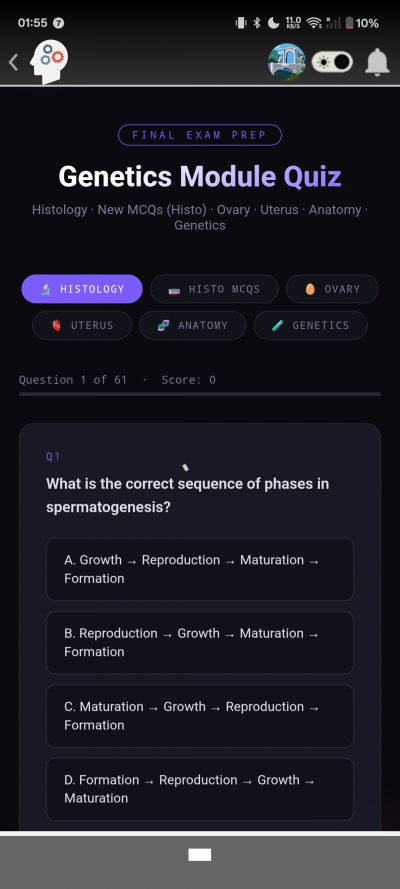
Content quality is the most important factor. The app should provide accurate, well-structured, and syllabus-based material. Concepts must be explained clearly using a mix of text, diagrams, and short videos. Interactive elements like quizzes, flashcards, and practice tests help reinforce learning and improve retention. Instant feedback on answers allows students to understand their mistakes and improve quickly.
Personalization is another key feature. A good app should track user progress and adapt to their learning speed. For example, it can recommend topics where the student is weak and provide additional practice. This makes learning more efficient compared to traditional one-size-fits-all methods.
Gamification also plays an important role. Features like points, badges, streaks, and leaderboards can motivate students to study regularly. When learning feels like a game, users are more likely to stay consistent and enjoy the process.
Offline access is especially useful for students with limited internet connectivity. Allowing users to download lessons ensures uninterrupted learning anytime and anywhere.
Additionally, integration with doubt-solving systems such as live chat, discussion forums, or AI-based help can make the app more powerful. Students should feel supported when they get stuck.
Finally, regular updates and new content keep the app relevant. A good education app is not just a digital textbook—it is an interactive learning ecosystem that supports, motivates, and guides students toward academic success.
Content quality is the most important factor. The app should provide accurate, well-structured, and syllabus-based material. Concepts must be explained clearly using a mix of text, diagrams, and short videos. Interactive elements like quizzes, flashcards, and practice tests help reinforce learning and improve retention. Instant feedback on answers allows students to understand their mistakes and improve quickly.
Personalization is another key feature. A good app should track user progress and adapt to their learning speed. For example, it can recommend topics where the student is weak and provide additional practice. This makes learning more efficient compared to traditional one-size-fits-all methods.
Gamification also plays an important role. Features like points, badges, streaks, and leaderboards can motivate students to study regularly. When learning feels like a game, users are more likely to stay consistent and enjoy the process.
Offline access is especially useful for students with limited internet connectivity. Allowing users to download lessons ensures uninterrupted learning anytime and anywhere.
Additionally, integration with doubt-solving systems such as live chat, discussion forums, or AI-based help can make the app more powerful. Students should feel supported when they get stuck.
Finally, regular updates and new content keep the app relevant. A good education app is not just a digital textbook—it is an interactive learning ecosystem that supports, motivates, and guides students toward academic success.
Related apps
More apps in the same category